Why Is My Cold Room Ceiling Turning Black? Causes, Risks and Solutions
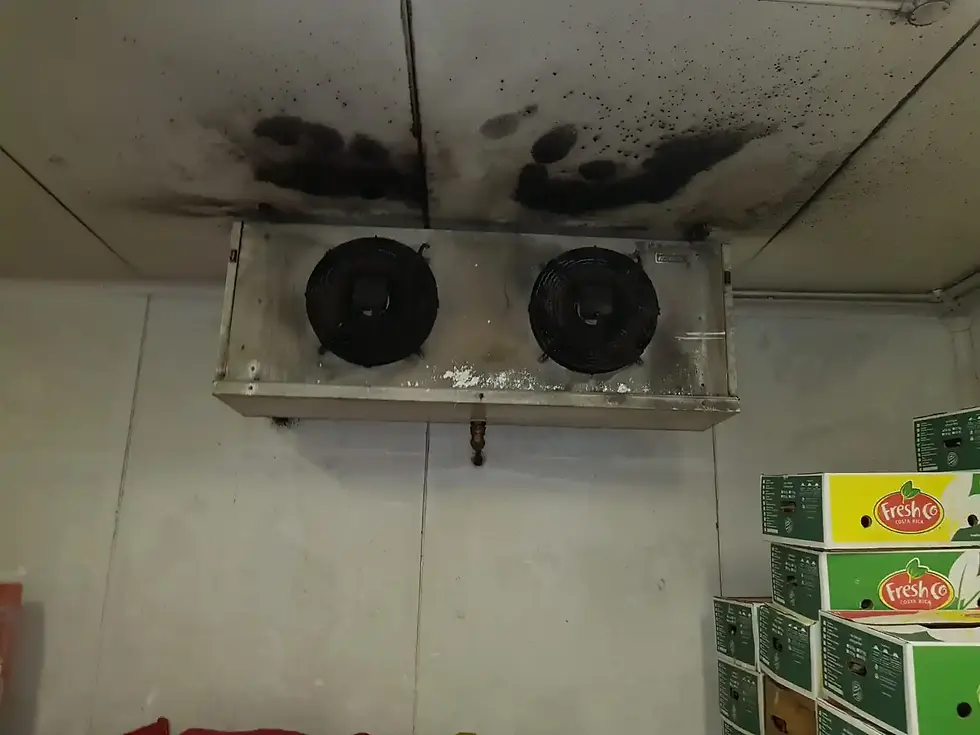
Have you noticed dark patches appearing on your cold room ceiling or around the refrigeration unit?
It can be concerning, particularly when the room is used to store food. What starts as a small patch of discolouration can gradually become more noticeable, raising questions about cleanliness, moisture and whether the refrigeration system is working as it should.
Black staining on a cold room ceiling can have several possible causes, including condensation, dirt accumulation and mould growth. However, the appearance of the staining alone isn't enough to identify the problem.
Understanding why it has developed is the first step towards dealing with it properly.
What causes black stains on a cold room ceiling?
Cold rooms operate in conditions where temperature and humidity need to be carefully controlled. When warmer, moisture-laden air enters the room, it can come into contact with colder surfaces and form condensation.
Over time, persistent moisture can contribute to staining and create conditions that encourage microbial growth.
However, condensation isn't the only possibility. Several factors may be involved.

1. Condensation and excess moisture
Condensation is one of the first things worth investigating when dark staining appears on a cold room ceiling.
Every time a cold room door opens, warmer air from the surrounding area can enter. If that air contains sufficient moisture, water droplets may form on colder surfaces.
Common contributing factors include:
Frequent or prolonged door openings
Damaged or poorly fitting door seals
High humidity in surrounding areas
Temperature differences between surfaces
Inadequate insulation or thermal bridging
Occasional condensation does not necessarily indicate a refrigeration fault. However, persistent moisture or water collecting on overhead surfaces should be investigated.
2. Possible mould growth
Dark patches can sometimes indicate mould growth, particularly where surfaces remain damp for extended periods.
Cold temperatures do not automatically prevent mould from developing. Some moulds can grow in refrigerated environments when suitable moisture and other conditions are present.
However, not every black stain is mould.
Dirt, dust and other deposits can produce similar discolouration. Identifying the material may require a closer inspection and, where appropriate, specialist assessment.
If mould is suspected in a food storage environment, the potential contamination risk should be assessed before cleaning or handling affected products.
3. Dirt and airborne deposits
Even inside a cold room, dirt and airborne particles can accumulate on ceilings, walls and refrigeration equipment.
Deposits may become particularly noticeable around areas affected by airflow or moisture.
When dust and dirt settle onto damp surfaces, they can create staining that becomes progressively harder to remove through routine cleaning.
This is one reason why inspecting overhead areas is important, rather than concentrating only on floors, shelves and easily accessible surfaces.
4. Refrigeration airflow and drainage problems
The refrigeration system can also play a part in moisture-related problems.
A cold room evaporator absorbs heat from the room. Depending on the system and operating conditions, moisture can collect on the evaporator coil and be removed through the drainage system.
Issues affecting this process may include:
Restricted airflow through the evaporator
Excessive ice accumulation
Incorrect or ineffective defrost operation
Blocked or damaged condensate drainage
Problems with evaporator fans or controls
These faults do not automatically cause black ceiling staining, but they can contribute to conditions that require investigation.
For a clearer explanation of how the equipment works, read our guide: How Does a Commercial Cold Room Work?
Is black staining in a cold room a food hygiene concern?
It can be, particularly when the room is used to store or handle food.
UK food hygiene requirements address the prevention of dirt accumulation, condensation, undesirable mould and contamination in food premises.
Ceilings and overhead fixtures are particularly important because moisture, particles or other contaminants can potentially fall onto food, packaging or preparation surfaces.
That doesn't mean every dark mark automatically represents a food safety breach.
The level of concern depends on factors such as the nature of the staining, its location, whether moisture is present and the potential for contamination.
However, visible staining should not simply be ignored.
Food businesses should assess the affected area in line with their food safety management procedures, particularly if staining is spreading, moisture is dripping or exposed food could be affected.
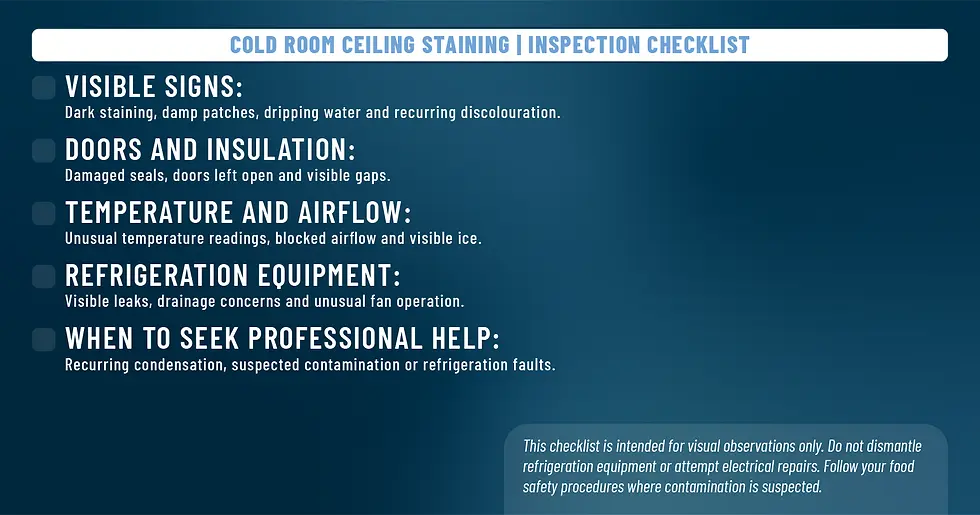
What should you check if your cold room ceiling is turning black?
If you notice new or worsening staining, there are a few basic observations you can make without dismantling the refrigeration equipment.
Check for visible condensation
Look for water droplets, damp patches or signs of moisture collecting on the ceiling and around the evaporator.
Does the area remain wet, or does condensation appear at particular times of day?
Inspect the door seals
Check whether the cold room door closes properly and whether the seals have obvious gaps or damage.
Warm air entering through a poorly sealed door can increase the moisture load inside the room.
Review how the cold room is used
Consider whether doors are being left open during deliveries, whether warm products are regularly introduced or whether stock is restricting airflow.
These operating conditions can affect how the refrigeration system manages temperature and moisture.
Check temperature records
Look for unexplained temperature fluctuations or recurring alarms.
Although temperature instability does not prove the cause of staining, it can provide useful information when investigating the condition of the system.
Look for signs of drainage or icing problems
Visible water leaks, persistent ice accumulation or unusual dripping around the evaporator may indicate an issue requiring professional attention.
Do not remove equipment covers, disturb electrical components or attempt refrigeration repairs without suitable competence.
If the staining may present a contamination risk, follow the business's food safety procedures and seek appropriate advice.
Why cleaning alone might not solve the problem
Cleaning affected surfaces can improve their condition and remove visible deposits, but it doesn't necessarily resolve the reason the staining developed.
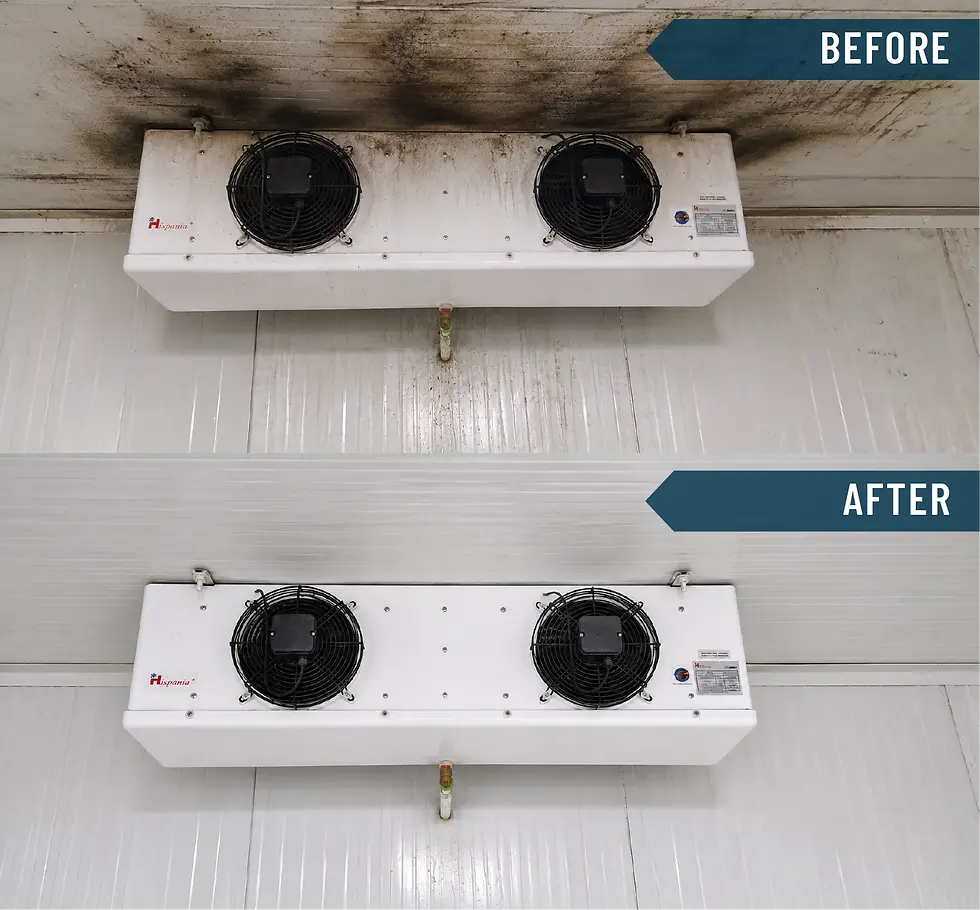
For example, if a damaged door seal is allowing humid air into the room, condensation may continue even after the ceiling has been cleaned.
Similarly, if an evaporator has a drainage or defrost problem, moisture-related symptoms could return until the underlying issue is addressed.
This is why it's important to distinguish between two separate tasks:
Removing the visible staining and identifying what caused it.
Both may require attention, but they are not necessarily the same job.
Cleaning methods must also be appropriate for the equipment and food storage environment. Spraying water around electrical components or using unsuitable cleaning chemicals can introduce additional risks.
Where suspected mould or other contamination is involved, specialist cleaning or remediation advice may be necessary.
How regular refrigeration maintenance can help
Planned refrigeration maintenance provides an opportunity to identify equipment problems before they develop into more significant faults.
Depending on the system and the agreed maintenance scope, an engineer may inspect:
Evaporator coil condition and cleanliness
Fan operation and airflow
Condensate drainage
Defrost operation
Temperature controls and sensors
Refrigeration system performance
These checks can help identify issues that may contribute to excess moisture, temperature instability or reduced refrigeration performance.
However, refrigeration servicing is only one part of managing a cold room.
The condition of the room itself, including insulation, door seals, cleaning arrangements and operational practices, also matters.
A properly maintained refrigeration system cannot compensate for every building or operational problem.
RSI Professional offers commercial refrigeration servicing and maintenance for businesses across London and surrounding areas.
When should you call a refrigeration engineer?
It's worth arranging a professional inspection if you notice:
Persistent condensation around the evaporator
Unusual water dripping from refrigeration equipment
Repeated ice build-up
Unexplained cold room temperature fluctuations
Reduced airflow or unusual fan operation
Suspected refrigeration or defrost faults
If the main concern is widespread staining, suspected mould or contamination of food storage surfaces, additional assessment by an appropriate cleaning, hygiene or building specialist may also be needed.
The important thing is to identify the right cause rather than repeatedly treating the visible symptoms.
Frequently asked questions
Can mould grow inside a cold room?
Yes. Refrigerated temperatures can slow the growth of many microorganisms, but they do not eliminate the possibility of mould. Persistent moisture and suitable surface conditions can allow certain moulds to develop.
Does black staining mean my refrigeration system is faulty?
Not necessarily. Staining can be associated with moisture, dirt accumulation or other environmental conditions. A refrigeration fault is only one possible contributing factor.
Will cleaning the ceiling stop the stains coming back?
Not always. If moisture ingress, condensation or another underlying issue remains unresolved, staining may return.
Can a blocked evaporator drain cause condensation problems?
A blocked or poorly functioning drain can cause condensate to accumulate or leak. However, it should not be assumed to be the cause of ceiling staining without inspection.
How often should a commercial cold room be serviced?
There is no single maintenance interval suitable for every installation. Servicing requirements depend on the equipment, manufacturer guidance, operating conditions, usage and maintenance history.
High-use or demanding commercial environments may require more frequent attention.
Concerned about your cold room's refrigeration system?
Dark staining should prompt a closer look at the condition of your cold room, particularly where moisture or temperature problems are also present.
Identifying the underlying cause is more useful than repeatedly cleaning the same area without understanding why the problem keeps returning.
At RSI Professional, we provide commercial refrigeration servicing, maintenance and repairs across London and surrounding areas.
If your cold room is experiencing condensation around the refrigeration equipment, unusual icing, drainage problems or inconsistent temperatures, our team can help investigate the refrigeration system.


Comments